

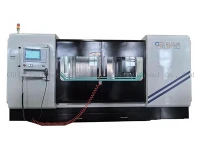
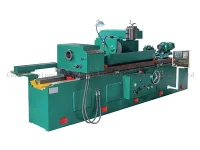
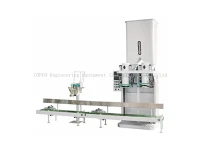
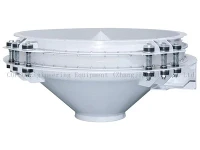
Conveying equipment refers to material handling machinery that continuously transports materials along a defined route; it is also known as an assembly line. Conveying lines can transport materials horizontally, inclined, and vertically, and can also form spatial conveying lines. The conveying route is generally fixed. Conveyors have large conveying capacity, long transport distances, and can simultaneously complete several technological operations during the conveying process, making them widely used.
Plate Chain Assembly Line: This line uses chain plates to drag workpieces in a planar conveying motion to achieve production process objectives. The assembly line adopts a modular assembly mode, and the number of workstations can be set according to process requirements. Workstations are equipped with power sockets, toolboxes, material boxes, etc., ensuring a fast and orderly process.
Installation Assembly Line: This line uses chains to drive tooling trolleys in a horizontal loop for workpiece assembly.
Differential Chain Assembly Line: This line uses specially made aluminum alloy profiles as guide rails and a speed-increasing chain to drag tooling plates as the conveying medium. The assembly line adopts a modular assembly mode, and the number of workstations can be set according to process requirements. The workstations are equipped with foot switches, power sockets, workstation stops, process diagram boards, lighting, etc. The production line is equipped with lifting and translation machines, lifting and rotating tables, etc., so that the entire process can be automated.