


As a supplier of flour mill service equipment, I'm deeply aware of the importance of well - trained personnel for the effective operation of our machinery. In this blog, I'll delve into the personnel training requirements for operating flour mill service equipment, covering aspects from technical knowledge to safety awareness.
1. Technical Knowledge Requirements
Understanding the Equipment Structure
Operators need to have a comprehensive understanding of the structure of flour mill service equipment. For example, the Hydraulic Fluting Machine consists of a hydraulic system, a fluting mechanism, and a control panel. Knowing how these components are interconnected and how each part functions is crucial. They should be able to identify different parts, understand their purposes, and know how to disassemble and assemble them when necessary for maintenance or repair.
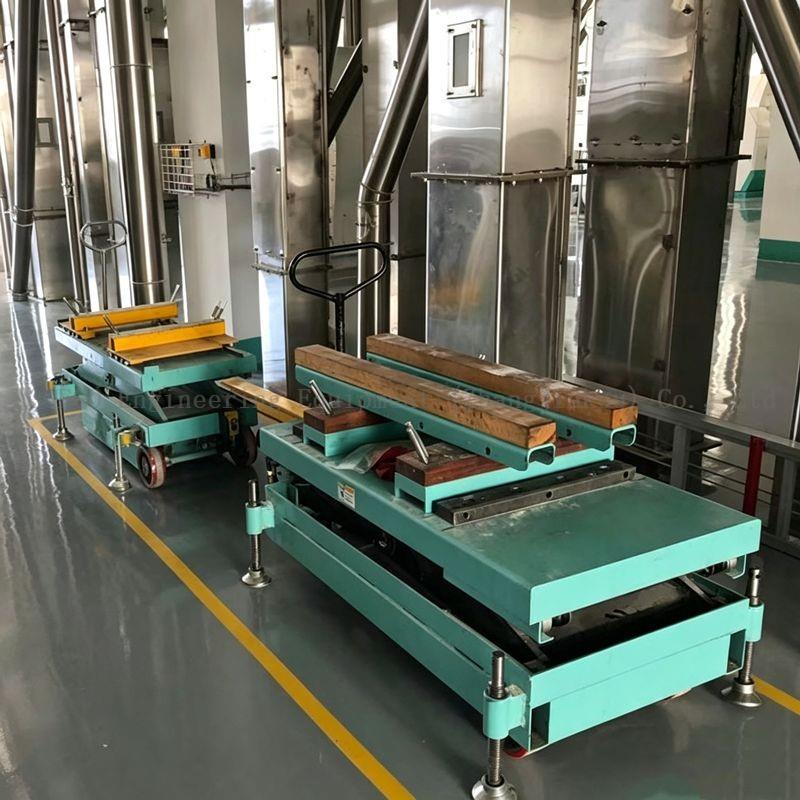
The same goes for the Hydraulic Roller Change Dolly and Electrical Roller Change Dolly. Operators need to understand the power systems (hydraulic or electrical), the lifting and moving mechanisms, and the safety features of these dollies. This knowledge helps in smooth operation and quick troubleshooting.
Mastering the Working Principles
Each type of flour mill service equipment operates based on specific working principles. The Roller Surface Sand Blasting Machine uses the principle of high - pressure air to propel abrasive particles onto the roller surface for cleaning or surface treatment. Operators should understand how the air pressure is regulated, how the abrasive is fed, and how to adjust the blasting parameters according to different roller materials and requirements.
The High Speed Fluting Machine operates at high speeds to create precise flutes on rollers. Operators need to know the speed control mechanisms, the feed rate adjustments, and how to ensure the quality of the fluting process. They should also understand the factors that may affect the fluting quality, such as the sharpness of the cutting tools and the stability of the machine.
2. Operational Skills Training
Equipment Operation Procedures
Regular and strict compliance with operation procedures is vital. For instance, when starting the Hydraulic Fluting Machine, operators should first check the hydraulic oil level, then turn on the power supply, and follow a specific sequence to start the hydraulic pump and the fluting mechanism. Similarly, for the roller change dollies, they need to follow a set of steps to safely lift, move, and position the rollers.
Training should also cover emergency stop procedures. In case of any abnormal situations, such as sudden power outages, mechanical failures, or safety hazards, operators should know exactly how to quickly stop the equipment to prevent further damage or accidents.
Parameter Setting and Adjustment
Most flour mill service equipment requires operators to set and adjust various parameters for different tasks. For the High Speed Fluting Machine, parameters such as flute depth, pitch, and cutting speed need to be carefully set according to the specifications of the roller. The Roller Surface Sand Blasting Machine also requires adjustments of air pressure, abrasive flow rate, and blasting time.
Operators should be trained to use the control panels and interfaces of the equipment to accurately set these parameters. They should also be able to troubleshoot if the equipment does not perform as expected after parameter adjustment, such as identifying if the problem is due to incorrect parameter settings or other mechanical issues.
3. Maintenance and Troubleshooting Skills
Preventive Maintenance
Preventive maintenance is essential to keep the equipment in good working condition and extend its service life. Operators should be trained to perform regular maintenance tasks, such as cleaning the equipment, lubricating moving parts, and checking for loose bolts and connections. For the hydraulic systems of the Hydraulic Fluting Machine and Hydraulic Roller Change Dolly, they need to know how to check the hydraulic oil quality and replace it at the appropriate time.

Troubleshooting
Even with regular maintenance, equipment may still encounter problems. Operators need to be able to identify common problems and take appropriate measures. For example, if the High Speed Fluting Machine produces uneven flutes, they should be able to check the cutting tools for wear, the feed system for blockages, and the machine's stability.
They should also know when to seek professional help. If the problem is beyond their ability to solve, such as a major mechanical failure or an electrical fault, they should be aware of the proper channels to contact technical support.
4. Safety Awareness
General Safety Rules
Safety is the top priority in operating flour mill service equipment. Operators should be trained on general safety rules, such as wearing appropriate personal protective equipment (PPE), including safety glasses, gloves, and ear protection. They should also be aware of the safety signs and labels on the equipment and follow them strictly.
Equipment - Specific Safety Precautions
Each type of equipment has its own safety precautions. For the Roller Surface Sand Blasting Machine, operators need to be careful when handling abrasive materials to avoid inhalation and skin contact. The high - pressure air in the blasting system also poses a risk, so they should check the hoses and connections regularly for leaks.
For the hydraulic and electrical equipment, such as the Hydraulic Fluting Machine and Electrical Roller Change Dolly, operators should follow strict safety procedures to prevent electric shock and hydraulic fluid leakage.
5. Quality Control Awareness
Understanding Quality Standards
Operators should have a clear understanding of the quality standards for the products and services provided by the flour mill. For example, in the fluting process, the flutes should meet certain depth, pitch, and surface finish requirements. In the roller surface treatment with the sand - blasting machine, the surface roughness and cleanliness should be within a specified range.
Quality Inspection Skills
They should be trained to perform basic quality inspections. For the fluted rollers, they can use measuring tools such as calipers and micrometers to check the flute dimensions. For the sand - blasted rollers, they can visually inspect the surface quality and use surface roughness testers if available.
Conclusion
In summary, the personnel training requirements for operating flour mill service equipment are multi - faceted. From technical knowledge and operational skills to maintenance, safety awareness, and quality control, well - trained personnel are the key to the efficient and safe operation of our equipment.
If you're interested in our flour mill service equipment or need further information about the training programs, we welcome you to contact us for a procurement negotiation. We are committed to providing you with high - quality equipment and comprehensive training support.
References
- Industry manuals and guidelines for flour mill service equipment.
- Technical documents provided by equipment manufacturers.